76% Americans Say Blue Collar Jobs Are Safer From AI


.avif "Kaivan Dave")

In times when AI threatens to damage the job market forever, a surprising consensus is coming through. Looks like the future of work might belong to those who work with their hands.
Americans think Blue-Collar Work is Safe
A new poll by the Business for Good Foundation reveals that 76% of Americans agree that jobs requiring hands-on experience are less likely to be replaced by AI.
The survey, conducted by The Harris Poll with 2,085 American adults, captures a fundamental shift in how people view career security.
The numbers tell an interesting story. Most respondents believe that hands-on skills and practical experience matter more than formal degrees when it comes to career success.
Even more striking, 78% say the stigma around blue-collar work is declining as society places greater focus on practical skills.
Mike Rowe, host of “Dirty Jobs,” told FOX Business recently:
“AI is coming for the coders. It’s not yet coming for the welders, and that basic understanding has taken root.”
And the logic seems straightforward.
AI can draft content, analyze data, and even write code, but it cannot easily crawl under a sink to fix a leaking pipe or rewire a breaker box while water drips overhead.
Some of the safest trades going forward would be Electricians and Plumbers. You can enter these skilled jobs without a formal degree. These jobs depend heavily on hands-on problem solving, physical work, and real-world judgment.
Some of the world’s most influential tech CEOs are amplifying this message. NVIDIA CEO Jensen Huang recently told BlackRock CEO Larry Fink at the WEF that now is the perfect time to go into the trades, citing six-figure salaries for workers building chip factories and AI data centers.
If you look at the data of the biggest industries with hiring drops in this decade, only white-collar jobs show up in the top 10, including marketing, management, and IT. That’s why Elon Musk also believes white-collar jobs are going to go away soon.
Musk told podcaster Joe Rogan:
“Anything that’s physically moving atoms, like cooking food or farming, anything that’s physical, those jobs will exist for a much longer time. But anything digital, which is just someone at a computer doing something, AI is going to take over those jobs like lightning.”
So, for now, he believes that physical jobs will stay safe.
Some surveys support this claim. Research shows that less than 1% of blue-collar jobs could be done by generative AI, compared with roughly 30 % of white-collar roles, largely due to the physical and unpredictable nature of manual tasks.
But Not Everyone Is Convinced
While the optimism is widespread, some warn that the blue-collar safety net may not hold as long as people think.
Geoffrey Hinton, the Nobel Prize-winning physicist known as the “Godfather of AI,” predicts that 2026 will bring a new wave of AI-driven job losses.
Though he acknowledges that blue-collar work will take longer to automate than office jobs, he noted that the timeline is shorter than many assume.
The technology backing up this concern is already here.
Boston Dynamics’ robot dogs patrol warehouses and climb stairs. Machines pour concrete slabs, lay bricks, and finish drywall with precision. Robotic arms perform surgery with steady, unshakable hands. These aren’t science fiction prototypes—they’re operational systems.
And while robots currently struggle with fine motor skills and unpredictable environments, AI doesn’t sleep, doesn’t plateau, and constantly improves.
Bill Gates also recently warned that AI could reshape both white- and blue-collar employment in the next few years:
“But I'd say in the next 4 to 5 years, both in the white-collar side and even in the blue-collar side, as these robots are starting to get better, it will mean the government will have to step up and deal with the equity issues.”
The manufacturing facilities are already using machines that can handle tasks with increasing sophistication. As of now, the most threatened blue-collar jobs are fixed-location ones in manufacturing or industrial settings.
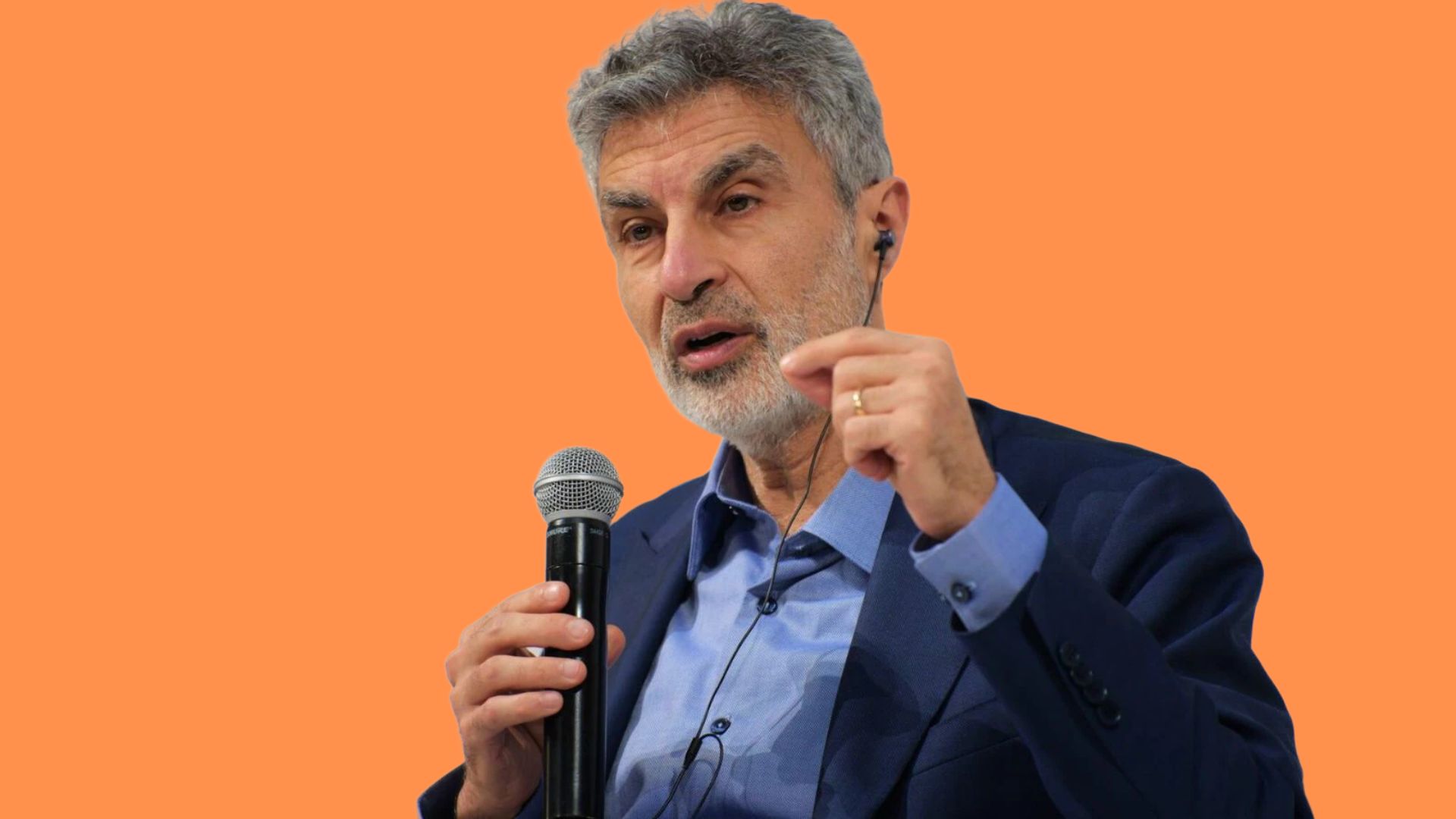
Yoshua Bengio, one of the pioneers of modern AI, predicts that AI will first replace white-collar jobs and then “eventually” physical jobs as robotics improves:
"But as companies are deploying more and more robots, they will be collecting more and more data. So eventually, I think it’s going to happen."
He predicts machines will get better at handling complex tasks when they gather more real-world data. Combine this with advances in mobile, connected, humanoid robots with access to massive computing power, and more jobs will eventually be impacted.
Bottom Line
What makes this debate complex is that both sides are partly right. Yes, it’s currently much harder to automate a plumber’s work than a data analyst’s. But technology doesn’t stand still.
Careers like electricians and plumbers will not be completely replaced by AI because their work happens in ever-changing physical environments. AI might assist with diagnostics, but it can’t climb and fix unexpected faults on the spot. That on-the-ground expertise keeps skilled trades in demand.
But the real question isn’t whether blue-collar jobs are safer from AI today. They clearly are. The question is whether that advantage lasts 5 years, 10 years, or a generation. And whether workers and policymakers can use that time wisely.
Table of Contents
Related articles
Is the Job Apocalypse Really Coming in 2026?
AI, layoffs, and slow hiring have sparked fears of a job apocalypse. Here’s what the data really says about jobs and work in 2026.
Ex-Google Exec Warns AI Is Coming for Software Developer Jobs Faster Than You Think
Ex-Google exec Mo Gawdat warns that AI may replace software developers sooner than expected, citing real-world examples and rapid industry changes.

Baker McKenzie To Lay Off 1,000 Jobs
Baker McKenzie is preparing major job cuts that could affect hundreds of roles as AI reshapes legal support work.
Godfather of AI Explains How AI Takes Your Job In 5 Years
AI Godfather Yoshua Bengio explains how rapid advances in AI could replace human jobs within five years.

Software Engineering Job Market Outlook for 2026
Here is our future outlook for the software engineering job market in 2026 and what developers can expect next.
Sam Altman says World wants 1000x more software, So Programmer Salaries are Skyrocketing
OpenAI CEO Sam Altman tells Federal Reserve conference that programmer salaries are rising as world demands 1000x more software despite AI growth.