Post-Layoff Job Search Guide for 2026


.avif "Kaivan Dave")

Layoffs have been the major headlines over the past couple of years. 2025 saw the highest number of layoffs in the US since 2020. If you are one of those affected, it truly stings. It’s not just about losing a paycheck. It’s the shock of sudden change and the uncertainty about what comes next.
Indeed’s 2026 Hiring Report suggests that the job market will stabilize, with new job openings emerging and the pace of layoffs slowing down.
But if you are laid off, don’t panic. It can also become a turning point. What you just need to remember is that in 2026, the job search game has completely changed. AI is screening resumes. Referrals matter more than ever. Remote roles are competitive.
If you approach this the right way, you will land a job faster. We created an 8-step guide for the post-layoff job search.
Why 2026 Hits Different When It Comes to Job Search?
The job market is going towards the “low-hire, low-fire” mode in 2026. So, job searching will also be different.
For starters, layoffs have become weirdly common across industries that used to feel bulletproof. Tech, finance, healthcare administration, media, none of them have been immune. People are calling it Forever Layoffs. So, don’t take it personally; many people are getting affected by it.
A lot of these layoffs are connected to companies restructuring around AI. They're not necessarily doing badly; they're just replacing certain roles with automation and investing those savings into leaner teams.
According to a recent CNBC survey, 89% of leaders say that AI will impact jobs, but not necessarily eliminate them. However, entry-level roles have been the most affected. Professionals with experience are relatively safer and often find it easier to re-enter the workforce.
Still, since many people are becoming jobless in a short span of time, the competition for open roles is high. This means hiring processes are becoming more selective, timelines are longer, and expectations are higher.
The key difference in bouncing back after a layoff in 2026 is that preparation matters more. Spraying your resume everywhere and hoping for the best is a losing strategy. A focused approach will get you where you want to go faster.
On the flip side, there are real opportunities in 2026 that didn't exist before. Entire job categories have emerged around AI. They are now referred to as New-Collar jobs.
So yes, AI is automating tasks overall. Data entry, coding, content, customer service, and scheduling, a lot of this is being handled by tools that didn't exist in their current form just three years ago.
You are just competing with others; you are competing with AI agents, too.
AI is also changing how you get hired. Applicant Tracking Systems (ATS) have gotten more sophisticated. They are not analyzing sentence structure, job history progression, or even writing style. This means your resume needs to be optimized.
Then some companies use AI tools to conduct initial screening interviews, where you record yourself answering questions and an algorithm evaluates your responses before a recruiter decides whether to bring you in. It sounds futuristic, but it's already happening at mid- to large-sized companies.
8-Step Strategy for Post-Layoff Job Search
What does this mean for you? It means you need to understand AI at least on a basic level, even if you are not in tech.
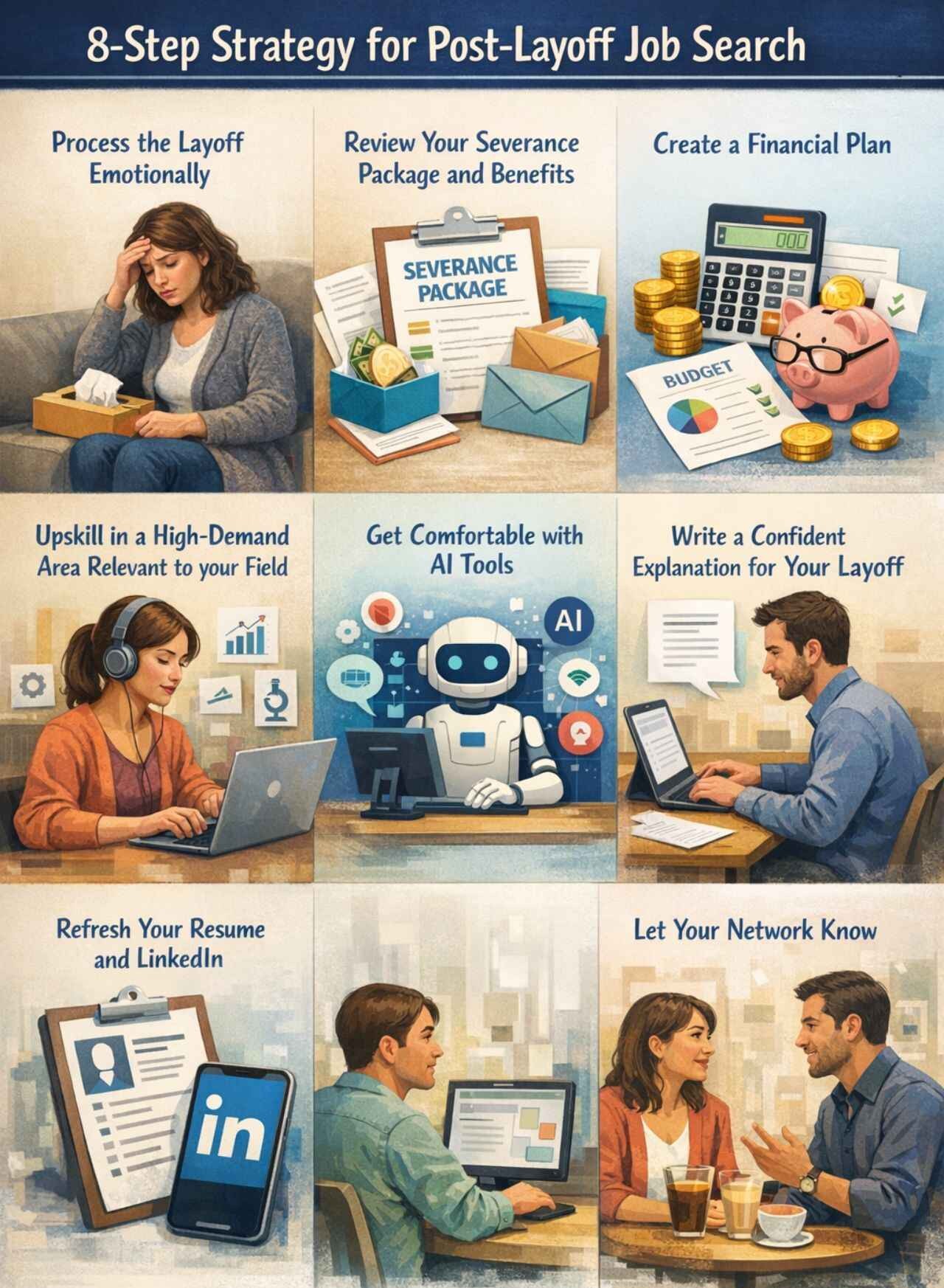
How to prepare for all that? Let’s start the guide with 8 steps.
1) Process the Layoff Emotionally
Before you do anything else, permit yourself to not be okay for a little while.
Getting laid off is a loss of income, yes, but also of routine and sometimes identity. There will be a lot of self-doubt. That's a lot to process all at once, and trying to jump immediately into job search mode without addressing the emotional weight usually backfires.
A study found that individuals who lost their jobs reported more than twice the number of mentally unhealthy days over a month compared with those who remained employed. You don’t want to fall into this trap. So, do this:
- Don't make any big decisions in the first 3 days. You are not thinking clearly when you are emotionally rattled, and the choices you make right out of the gate can set you back further than the layoff itself.
- Spend a couple of days just letting yourself feel what you feel. Talk to someone you trust, be it your partner, a friend, or even a therapist if you have access to one.
- Don’t expose yourself to negativity. Constantly reading layoff news or scrolling LinkedIn posts about layoffs can amplify stress. Stay informed, but don’t doom-scroll. You need it for what’s next.
This doesn't mean you disappear for a month. It means you are giving yourself some time before you shift into action mode.
Entrepreneur Ankur Warikoo shared a heartfelt insight about layoffs on LinkedIn, saying that losing a job often feels like losing a part of your identity and belonging. But he reminded people that layoffs don’t define the rest of your life.
“If you go on to live for 80 years, then this moment will mean nothing!”
This perspective-shifting way of saying that a layoff is just one short chapter in a long story.
Once you have had that time, you will be surprised how much clearer your thinking is and how much more focused and effective your job search becomes.
Also, if you are not actually fired, but you want to quit, here is a simple guide to help you with that.
2) Review Your Severance Package and Benefits
Right after the emotional dust settles a little, you need to handle your severance and benefits.
This is one of those areas where a lot of people lose money simply because they don't know what they are entitled to. Do this:
- Start with the severance pay itself. How many months of salary are you receiving? Is it a lump sum or paid out over time? That affects how you budget and even how unemployment benefits might apply in your region.
- Read your severance agreement carefully. Don't just sign it because it feels awkward to push back. In many cases, severance packages are negotiable, especially if you have been at the company for several years. If you are unsure, consult with an employment attorney.
- Figure out your health insurance situation immediately. If you have employer-sponsored insurance, check when your coverage ends. If your employer offers extended coverage options, understand the cost difference once you are paying the premium yourself.
- File for unemployment insurance as soon as possible. Don't wait on this. Most US states allow you to file online, and benefits typically take a week or two to kick in.
Finally, document everything. Keep copies of your severance agreement, final payslips, tax documents, and benefits paperwork organized in one place.
Data from FRED show that the median duration has been on the rise in recent years. It has increased from about 8 weeks to over 10 weeks. For some, it is more 4-6 months.
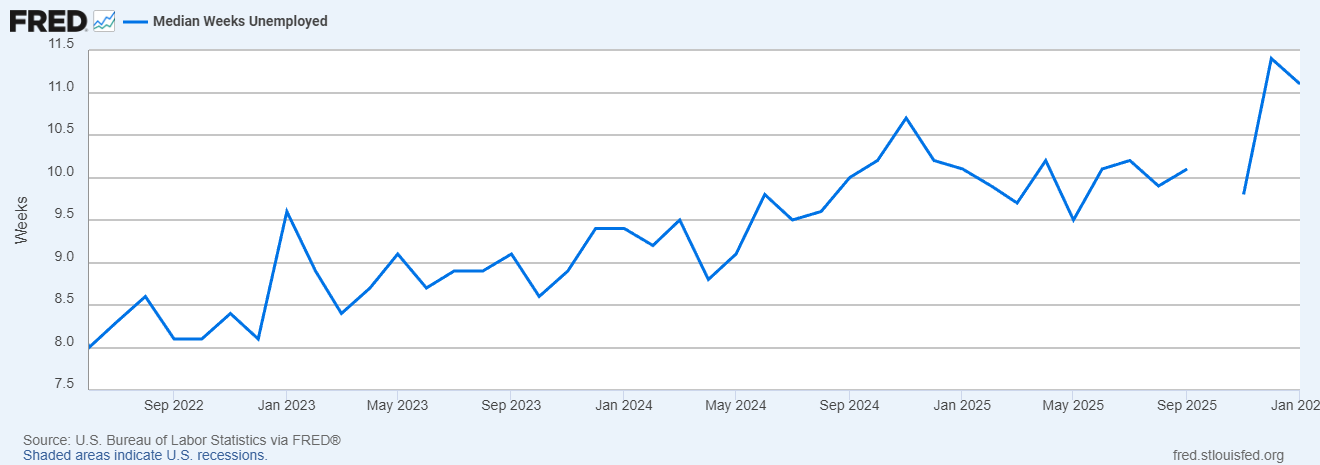
So, any money you get or benefit you can continue to fight for it.
3) Create a Financial Plan
Once you know what severance you are getting, it's time to build a simple financial plan.
According to Bankrate’s 2025 Emergency Savings Report, only 46% of US adults have enough savings to cover 3 months of living expenses. This shows most people start a job loss without a full financial safety net.
So, what you need is a clear picture of how long you can go without a paycheck before things get uncomfortable.
Another survey found that about 60% of workers said they are trying to reduce spending because they worry about layoffs. So, assessing your financial safety net is important even before getting fired.
Here’s what you need to calculate:
- First, add up your monthly expenses: rent or mortgage, utilities, groceries, insurance, subscriptions, and debt payments.
- Then, look at what's coming in (runway): severance, unemployment, and any savings you have in reserve.
Divide your runway (savings + expected income) by your monthly expenses. Compare the monthly runway with monthly expenses.
That gives you roughly how many months you have before you need to be drawing a salary again.
For most people, knowing this number is actually calming. It helps you make smarter decisions, like whether to cut discretionary spending now or wait and see.
If you have 6 months of coverage, you can job search strategically. If you have 3, you may need to move faster or consider temporary income. Also, immediately pause or reduce non-essential expenses.
A structured financial plan restores confidence.
4) Upskill in a High-Demand Area Relevant to your Field
Now, before you start editing your resume and applying on job sites, you need to take some time to upskill yourself. Use this unexpected free time to level up in an area that employers in your field are actively looking for.
You don’t need to learn everything new, just 1 skill, or maybe 2. Focused learning beats scattered learning every time.
Start by looking at job descriptions for roles you actually want. Find the skills or tools that keep showing up that you don't fully have yet? Shortlist the 1 or 2 most common skills you noticed.
All you need is to take a short course and get a certificate to learn the skill. Most of the learning material can even be found on YouTube. Certifications can be earned in under 2 weeks.
Adding a recently completed certification to your resume and LinkedIn signals that you are adaptable as well as productive.
Joe Depa, Global Chief Innovation Officer at EY, advised job seekers:
“The ability to adapt and change is going to be the most important component.”
NACE’s 2026 Job Outlook found that nearly 70% of employers in the US say they now focus on skill-based hiring.
So, what matters more is how quickly you can learn new skills, not just one degree or your years of experience.
5) Get Comfortable with AI Tools
Knowing how to use AI tools in your day-to-day work will be the biggest differentiator in 2026.
A report from Nash Squared and Harvey Nash states that in just 18 months, AI has moved from the sixth most scarce tech skill to the number one spot worldwide.
You don't need to be an AI engineer. But you do need to be fluent with the tools that are already reshaping work in your domain.
Start with ChatGPT or Claude. These are the big conversational AI assistants that can help you research, analyze, brainstorm, research, and code.
Don’t just consume tutorials. Apply what you learn. Spend a couple of days just playing around with prompts and seeing what's useful. Then explore tools specific to your field. Understand how you can work faster and smarter.
Being able to say "I use [specific AI tool] to [specific task]" can become a highlight in your interview. Companies are actively looking for people who can make their teams more efficient using AI, which means your willingness to learn these tools is genuinely valuable.
Shift your mindset. AI isn’t your competition, but it’s your assistant.
According to recent data, AI has become a must-have skill in 41% of tech job listings:
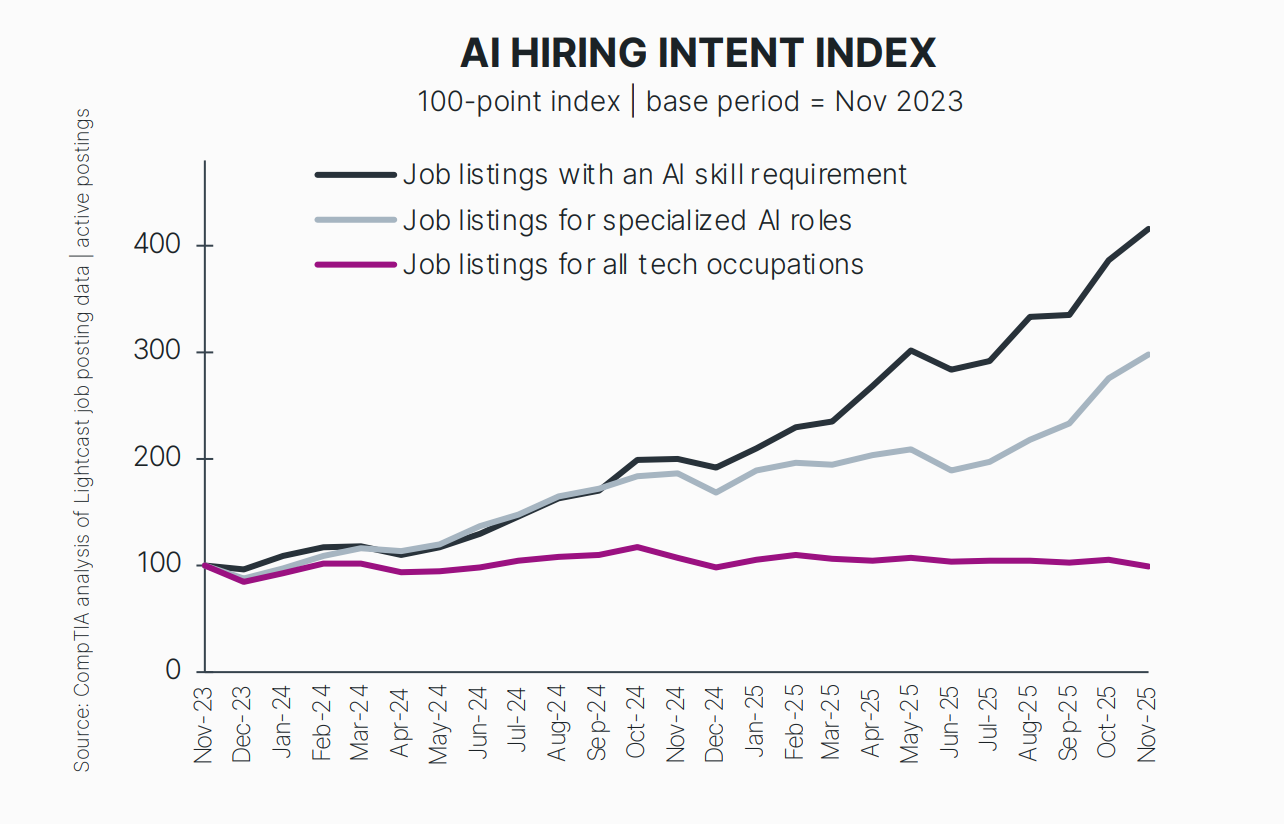
So, AI is becoming a permanent requirement for any job in the future.
Andrew Ng, co-founder of Coursera, says companies are urgently seeking AI talent. He advises developers to start taking AI courses and actively build AI systems to stay competitive and grow in their tech careers.
6) Write a Confident Explanation for Your Layoff
This is the question that trips up a lot of people after a layoff, and it doesn't need to. Interviewers are going to ask it, and the way you answer it will either make them feel confident in you or create doubt.
But being laid off carries almost no stigma in 2026. Companies have been doing mass layoffs for several years now, and interviewers know it. What they are listening for is how you talk about it.
Write yourself a 2-to-3 sentence explanation for a layoff where you showcase ownership without blame.
Even if the company handled things poorly, resist the urge to criticize your former employer. If you sound bitter, defensive, or overly negative, it raises red flags. Instead, focus on the bigger picture. You can say, for example:
“The company went through cost-cutting measures and eliminated several roles, including mine.”
That shows you understand the situation and aren’t taking it personally.
After you briefly explain what happened, pivot quickly to growth. This is where you take control of the narrative. Talk about what you have been doing since the layoff: upskilling, freelancing, consulting, building projects, learning new tools, or even taking time to reassess your goals.
And keep all this concise. The more you over-explain, the more it can sound like justification. Think of it as context, not a confession. Your goal is to redirect attention to what you bring to the table now.
7) Refresh Your Resume and LinkedIn
Now it's time to update your resume and LinkedIn profile
For your resume, focus on results, not just responsibilities. Instead of "Managed social media accounts," write "Grew Instagram following by 40% in six months, driving a 15% increase in website traffic." Quantify whatever you can, because concrete outcomes make your experience tangible and memorable.
Make sure your resume is ATS-friendly. That means using clean formatting (no tables, no weird fonts, no text boxes), using keywords from the job descriptions you are targeting, and keeping things to one or two pages, depending on your experience level. More Resume Tips here.
Remember that 70% of large companies use ATS or other tech-powered tools to review applications.
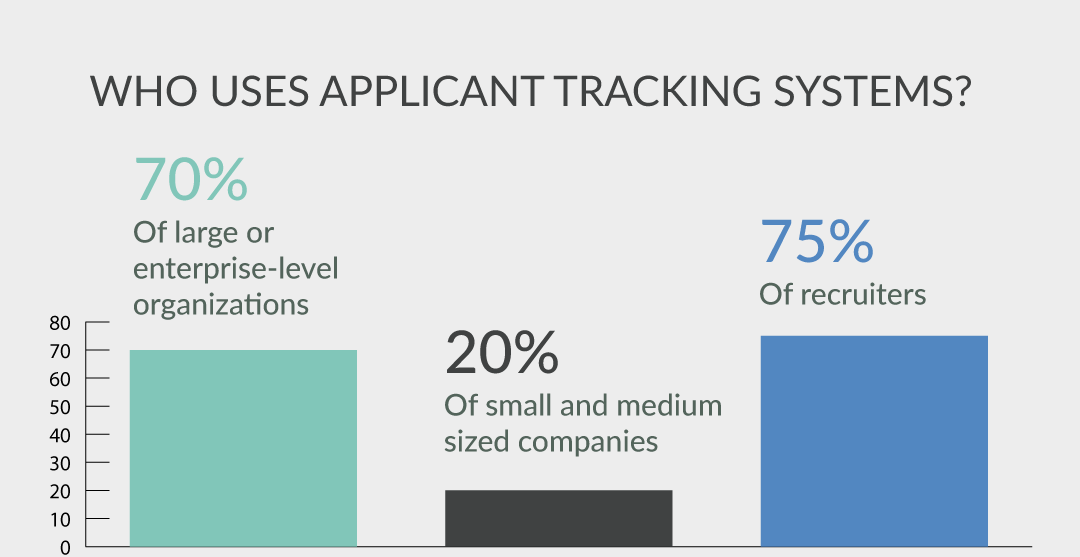
On LinkedIn, update your headline to reflect what you are looking for or what you bring to the table. Turn on "Open to Work". Write a summary that sounds like a real human, not a corporate press release.
And ask former colleagues or managers if they would be willing to write you a LinkedIn recommendation.
8) Let Your Network Know
If you are not using your network, you are leaving the most powerful job search tool on the table.
Research consistently shows that a significant percentage of jobs are filled through referrals and personal connections.
You don't need to blast a generic like "I am looking for work!" post to everyone you have ever met. Instead, reach out individually to your former colleagues, managers, and classmates, and let them know you are exploring new opportunities.
Be specific and tell them what kind of role you are looking for. Ask if they know of anything, or if they would be willing to introduce you to someone in a company or role you are interested in.
According to Pinpoint, an internal referral can increase your chances of landing an interview by up to seven times.
Maybe This Is Your Chance to Actually Change Directions
This one isn't in the main list, but it deserves a mention. A layoff can be a genuinely good moment to ask whether you even want to go back to what you were doing before. Maybe a good time to switch careers?
So before you just reflexively look for the same job at a different company, take a beat and ask yourself some honest questions. What parts of your last job actually energized you? What drained you? Are there adjacent industries where your skills could transfer and that might be more interesting?
For new opportunities, find recession-proof jobs where you can work in peace.
Bottom Line
A layoff is a hard thing to go through. But it's also, genuinely, one of the more clarifying experiences a career can throw at you. It strips away the comfortable autopilot and forces you to be intentional.
The job market now rewards people who are adaptable and willing to learn.
So, take the time to heal first. Handle the practical stuff. Sharpen one skill. Learn to work alongside AI instead of fearing it. Show up to interviews with a clear, confident story. And lean on the people who know you.
Find out more about what to do if you are fired from your job, including what to do and what not to do.
Table of Contents
Related articles

Uber Interview Process Explained for Freshers
Learn how the Uber interview process works for freshers. Step-by-step stages, sample questions, and tips to help you prepare.

Morgan Stanley Interview Process Guide for Freshers
Explore the complete Morgan Stanley Interview Process for freshers, from online assessments to technical interviews.
![Deloitte Interview Process [2026]](https://cdn.prod.website-files.com/6660a5bfdcf6c5fbf039f446/690dee4e9930175f5308d004_Deloitte%20Interview%20Process.jpg "Deloitte Interview Process [2026]")
Deloitte Interview Process [2026]
Understand the Deloitte Interview Process in a step-by-step guide. including questions and tips to get hired.

Project Manager Career Path: 13 Key Roles & Salaries
A guide for career paths for a project manager, from an entry-level job to Senior Project Manager, to COO. Understand essential skills for each role.

