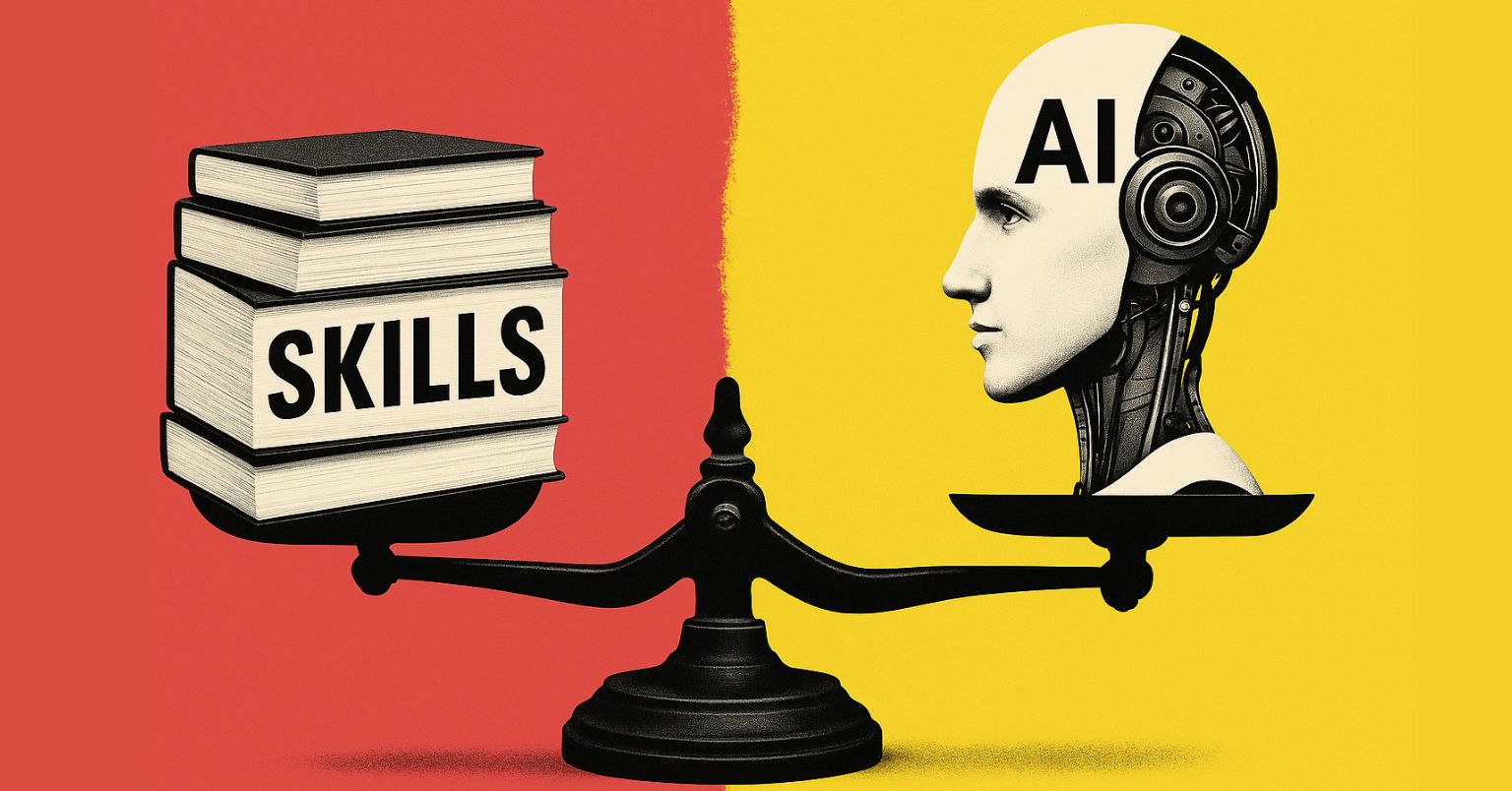
Study Finds AI Efficiency Gains Lead to More Work, Not Less


.avif "Kaivan Dave")

New research published in Harvard Business Review reveals a troubling paradox: as workers become more efficient with AI, their workloads are actually increasing rather than decreasing.
AI’s Promise Meets Real-World Work
Your company introduces a powerful AI tool that can summarize lengthy reports instantly or help you code faster than ever before.
You now think that you will have more time for the truly important work. But months later, you are working longer hours and feeling more burned out than before.
It’s exactly what researchers from the University of California, Berkeley discovered when they spent 8 months studying what happens when workers genuinely use AI in the workplace.
Researchers Aruna Ranganathan and Xingqi Maggie Ye followed employees at a 200-person tech company and conducted over 40 in-depth interviews across engineering, product design, research, and operations departments.
What they found challenges everything we have been told about AI making our lives easier.
The AI companies promise that their tools will handle routine tasks, freeing workers to focus on higher-value work. The reality turned out to be far more complicated.
“You had thought that maybe, oh, because you could be more productive with AI, then you save some time, you can work less. But then, really, you don’t work less. You just work the same amount or even more.”
Recent discussions about AI’s role in work also highlight how AI is reshaping software development itself. OpenAI’s board chair argues that the future won’t be about Vibe Coding, but instead will center on autonomous AI agents that can act independently.
AI is shifting the landscape from traditional coding toward AI builders, rather than just writing lines of code. This evolution supports the study’s finding that AI doesn’t simply reduce effort; it reframes the nature of work.
3 Ways AI Intensifies Work
The Berkeley research team identified three distinct ways that AI efficiency paradoxically creates more work:
- Task expansion: According to the study, employees increasingly “absorbed work that might previously have justified additional help.” An engineer might suddenly be fixing design issues, a designer might be writing code, and everyone seemed to be doing a little bit of everything.
- Continuous engagement: Workers began feeding prompts to AI before heading to meetings or lunch, keeping the AI working in the background. What once felt like downtime transformed into micro-moments of productivity. The researchers found that “these actions rarely felt like doing more work, yet over time they produced a workday with fewer natural pauses.”
- Implicit pressure: Even though nobody was explicitly told to take on more work, employees felt compelled to do so. When everyone around you is accomplishing more with AI, you feel you should be doing more, too.
But all this extra work might not actually be better.
The research found that constant multitasking is made possible because AI actually diminishes the overall quality of work.
A separate study last summer discovered something even more similar. experienced software developers using AI tools took 19% longer to complete tasks while believing they were actually 20% faster. They felt more productive but were objectively less efficient.
The consequences of this AI-driven work intensification are already becoming visible. The researchers warned that nonstop work leads to “fatigue, burnout, and a growing sense that work is harder to step away from.”
This observation is backed up by workers themselves.
One common viewpoint among employees is thatwhile AI accelerates routine tasks, it often produces average results that still require human supervision.
Bottom Line
However, the Berkeley researchers aren’t suggesting we abandon AI tools. Instead, they recommend that organizations become far more intentional about implementation:
- Built-in pauses: Companies should incorporate deliberate breaks into workflows to allow employees time to evaluate decisions, reconsider assumptions, and simply recharge.
- Protect focus time: Organize work to give employees uninterrupted windows for deep concentration rather than constant AI-assisted task-switching.
- Define expectations clearly: Company leaders need to explicitly state what “AI fluency” means for different roles and involve employees in AI strategy decisions.
This paradox doesn’t mean the technology is bad. But it does mean we need to rethink how we implement these tools and what we expect from them.
Table of Contents
Related articles

US Unemployment Rate in 2025 Hits Highest Level in Four Years
The US unemployment rate in 2025 explains why joblessness is rising and how the labor market is changing this year.

Andrew Yang warns AI could erase 40 million jobs in a decade
Andrew Yang warns that AI could eliminate up to 40 million US jobs in the next decade, calling for measures to handle rising automation
Cursor CEO Built a Browser using AI, but Does It Really Work?
A browser built by hundreds of AI agents in just one week sounds impressive, but the real question is what works and what breaks?

12 White-Collar Jobs Most at Risk from AI in 2025
AI is replacing white-collar workers faster than anyone predicted. Companies are cutting entire departments. Check if your job is among the 12 at highest risk.