Sam Altman Says AI Could Soon Replace Him as OpenAI CEO


.avif "Kaivan Dave")
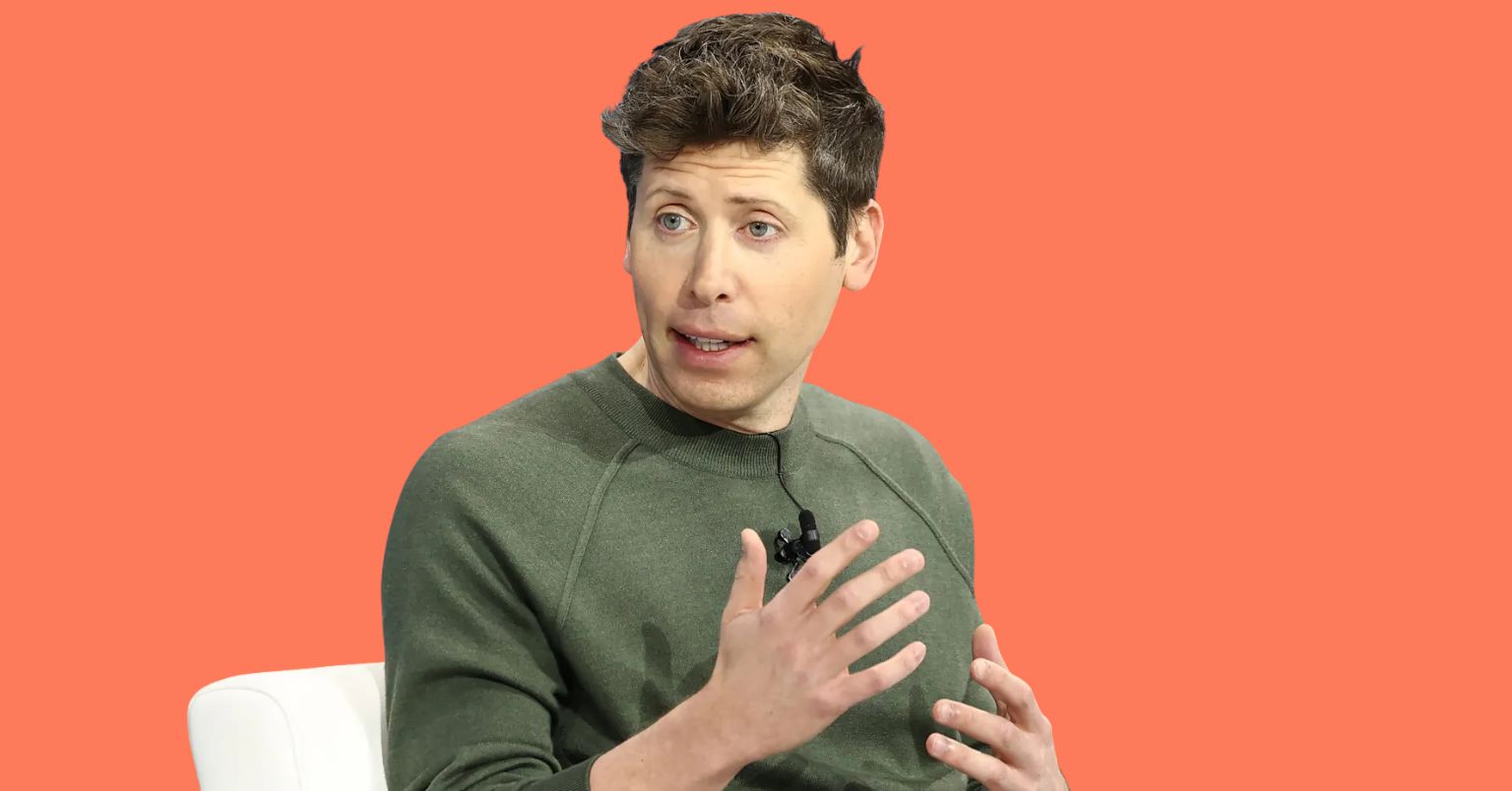
OpenAI CEO Sam Altman just made a stunning prediction about his own job - artificial intelligence will be capable of running major parts of his company within just a few years - and he's already thinking about when he could step aside entirely.
During a recent interview, Altman laid out a detailed timeline for when AI could handle executive responsibilities at OpenAI, offering one of the most candid assessments yet from a tech CEO about AI replacing leadership roles.
The Timeline for AI Leadership
When asked how far off it is before a single division of OpenAI could be 85% run by AI, Altman didn't hesitate.
"Some small single-digit number of years. Not very far, not very far," he said.
But the full CEO role presents a more complex challenge. Altman explained that while AI could handle decision-making, the public-facing aspects of being a CEO create complications.
"CEO is tricky because the public role of a CEO becomes more and more important," Altman said. "If I can pretend to be a politician, which is not my natural strength, and AI can do it too - let's say I stay involved for the public facing whatever. It's like actually making the good decisions, figuring out what to do."
For the decision-making part? Altman sees AI handling it much sooner.
He then dropped perhaps his most striking forecast: "You'll have billion-dollar companies run by two or three people with AI."
When pressed on the timeline, Altman revised his earlier optimism slightly. "I used to think one year, but maybe I've put it off a bit. I'm not more pessimistic about the AI - maybe I'm more pessimistic about the humans."
Despite AI's growing capabilities, Altman acknowledged a major obstacle to widespread adoption of AI leadership: human psychology.
"People have a great deal higher trust in other people over AI, even if they shouldn't, even if that's irrational," he said. "You know, the AI doctor is better but you want the human."
He believes this trust gap will significantly slow AI's takeover of leadership roles, even as the technology itself becomes capable.
Already Preparing for Replacement
Altman revealed he's actively using a thought experiment to prepare OpenAI for an AI-driven future.
"Shame on me if OpenAI is not the first big company run by an AI CEO, right?" he said. "I find this a very interesting thought experiment of what would have to happen for an AI CEO to be able to do a much, much better job of running OpenAI than me, which clearly will happen someday."
He said this thought experiment helps guide how OpenAI designs its organization over time.
Altman is also carefully screening new hires for their adaptability to an AI-driven workplace.
"A big one is how they use AI today. And the people who still are like 'Oh yeah, you know, I use it for better Google search and nothing else' - that's not necessarily a disqualifier, but that's like a yellow flag," Altman said.
He wants people who are already thinking ahead. "People who are seriously considering what their day-to-day is going to look like in three years - that's a green flag. A lot of people aren't."
GPT-5 and New Science
Altman said GPT-5 is the first model to show a glimmer of AI doing new science - small signs that it can generate new ideas or help with research.
Altman said progress will remain extremely steep over the next few years, with models gaining capabilities that humans can't yet match.
For OpenAI specifically, Altman sees parts of the company operating largely under AI management within just a few years. The complete transition to an AI CEO? That depends less on technological progress and more on whether people can accept machines in positions of ultimate authority.
Table of Contents
Related articles
Perplexity CEO Admits Entry-Level Jobs Are Disappearing Fast
Perplexity CEO Aravind Srinivas says entry level jobs are disappearing fast. He shares which roles are being replaced and what workers need to do.

Angi Layoffs: 350 Jobs Cut as AI Takes Over More Work
Angi, also known as Angie's List, is laying off 350 employees, citing AI for efficiency gains. Here’s what happened and why it matters.

Study Finds AI Efficiency Gains Lead to More Work, Not Less
A new study finds that AI efficiency gains are increasing workloads instead of reducing them, and how it is reshaping modern jobs in 2026.
Elon Musk's xAI Lays Off 500 Workers Who Train Grok AI
Elon Musk's xAI fired 500 data annotation workers who train the Grok chatbot via Friday night emails, cutting a third of its largest team in a strategic pivot.
Tech's New Math: Fire Thousands, Hire AI Experts for Millions
Tech companies are firing thousands of workers while offering AI researchers $200 million packages. Here's the brutal math behind Silicon Valley's transformation.